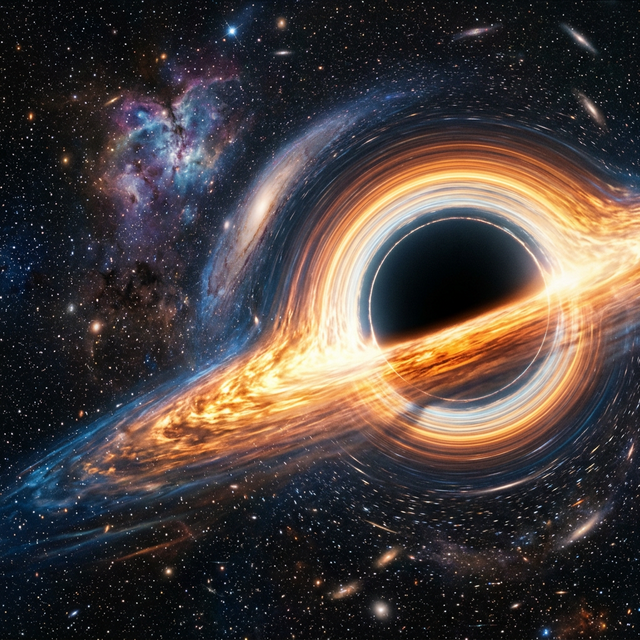
The Geometry of Collapse
Gravitational wells, particularly those generated by high-density singularities like black holes or neutron stars, are the primary obstacles in interstellar navigation. A gravity well is not just a hole in space; it is a profound distortion of the Riemann-Weyland metric. For a vessel in a Tachyonic Shunt, a gravity well acts as a 'Catchment Area', where the manifold becomes so steep that the superluminal shunt can no longer maintain its coherence.
Weyland-Yutani's **Gravity-Well Analysis (GWA)** program focuses on mapping these wells across the Reticuli sector. By understanding the 'Slope' of the local manifold, we can calculate 'Safe-Entry Vectors' that allow our ships to utilize gravitational lensing for acceleration without being crushed by the tidal forces of a singularity.
The 40% Shift
One of the most profound mysteries in the Zeta Reticuli system is the 'Mass Discrepancy'. Standard mass-density scans of the sector's main stars suggest a specific gravitational lensing effect. However, observational data from our long-range probes indicates a lensing effect that is 40% stronger than mass alone can account for.
This suggests the presence of **Undocumented Exotic Matter** or a localized 'Sub-layer Singularity'—a rip in space-time that has mass but no physical presence in our three-dimensional reality. At Weyland-Yutani, we are currently testing probes that can dive into these anomalies to harvest the exotic particles trapped within. We don't just avoid the mystery; we capitalize on it.
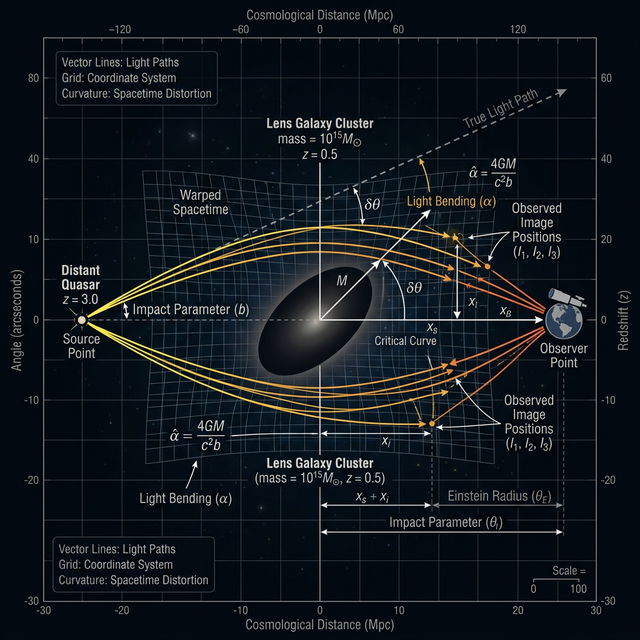
[ FIG 9.4: ANOMALOUS LENSING VECTORS // LV-426 ORBITAL SECTOR ]
SYSTEM STATUS: VERIFIED // CLEARANCE LEVEL 4
Navigating the Hall of Mirrors
Extreme gravitational lensing creates a phenomenon known as 'Ghost-Images'. Because light is bent around the mass anomaly, a single star can appear in multiple positions at once. To a human pilot, the sky becomes a hall of mirrors. This optical distortion is not limited to visible light; it affects the ship's tachyonic sensors as well.
Navigation through a lensing sector requires **Synthetic Over-ride**. Only a synthetic's NP-Core can process the billions of variables required to filter out the 'Ghost-Images' and identify the true position of the celestial targets. At Weyland-Yutani, we trust in logic to see through the illusions of the universe.
The Breaking Point
When a vessel in a Tachyonic Shunt encounters a sudden gravitational gradient—such as the edge of a black hole's photon sphere—it experiences **Metric Shear**. This is a physical strain on the ship's structure caused by the front of the ship experiencing a different space-time curvature than the rear. If the gradient is steep enough, the ship will be torn apart molecularly before it even crosses the event horizon.
Our **Shear-Damping Modules (SDMs)** utilize counter-tachyons to 'flatten' the local gradient around the hull, creating a localized 'Safe-Metric Zone'. This allows Weyland vessels to perform graze-maneuvers near high-mass objects that would destroy any other ship. We turn the universe's most dangerous traps into our most efficient highways.
Automated Clarity
The **Lensing-Compensator v4.0** is the pinnacle of Weyland navigation technology. Integrated directly into the ship's NP-Core, it utilizes a database of 4 trillion stellar signatures to identify and correct for gravitational distortions in less than 4 nanoseconds. The compensator doesn't just fix the image; it predicts the distortion before it occurs.
This technology is standard on all M-Class vessels and is a primary reason for our 99.9% safety rating in deep-space transit. While our competitors are lost in the 'Ghost-Images', Weyland-Yutani always knows exactly where the horizon is.
Riding the Well
The final frontier of gravity-well navigation is the 'Tachyonic Slingshot'. By diving into a high-density well at 0.99c and activating the TSD at the point of maximum curvature, a vessel can be 'flung' across the sector at velocities exceeding 3000c. While extremely dangerous, this maneuver could reduce the transit time to the Outer Rim from months to weeks.
Theoretical models suggest that with the correct ABC-shielding and a dedicated Walter-class synthetic at the helm, the 'Slingshot' is within reach. At Weyland-Yutani, we are not afraid of the depths; we are simply preparing for the climb.
— Dr. K. Sterling, Senior Gravitational Consultant, Weyland-Yutani