Primary Ionization in the Sub-layer
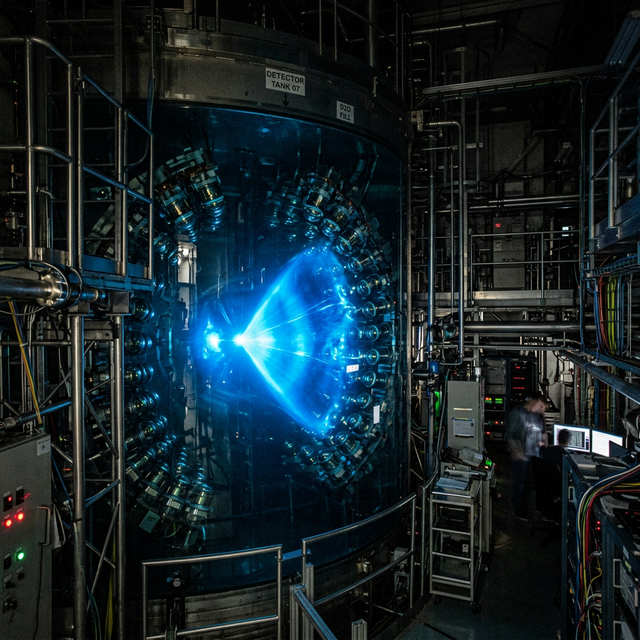
The activation of a Tachyonic Shunt Drive (TSD) creates a localized environment of intense ionizing radiation far beyond the capabilities of standard nuclear or cosmic sources. This radiation, colloquially known as the 'Shunt Glow', is the result of superluminal tachyons decaying into low-energy neutrinos and gamma-ray bursts as they encounter the physical boundary of the vessel's hull.
Crucially, this decay is not uniform. The rate of tachyonic degradation is tied to the 'permeability' of the local Riemann metric. In sectors where space-time is 'brittle', the decay rate can increase by up to 400%, flooding the ship's interior with a high-velocity particle stream that can bypass conventional lead or water-based shielding. This necessitated the development of molecularly-aligned boron-carbide plating.
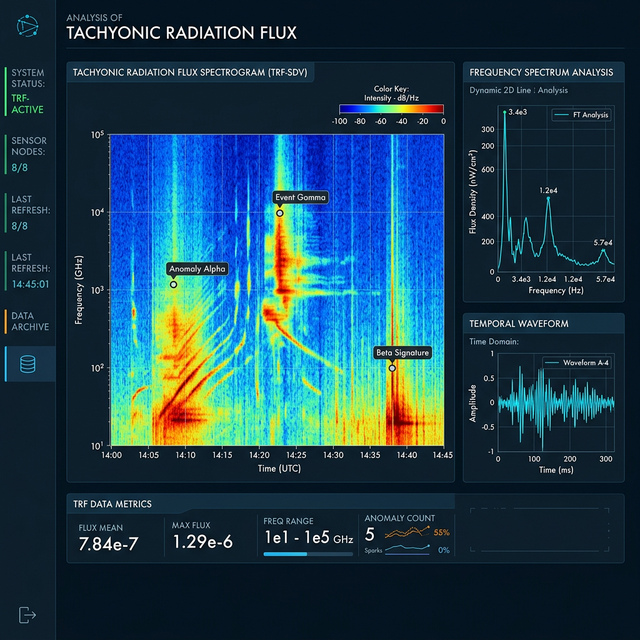
[ DIAGRAM 12.4: TACHYONIC DECAY FLUX / VELOCITY CORRELATION ]
SYSTEM STATUS: ASSET ANALYSIS COMPLETE // RADIATION THRESHOLD: NOMINAL
The Myth of the Passive Neutrino
In classical physics, neutrinos were thought to be nearly non-interactive with matter. However, at the energy scales generated by a TSD, these neutrinos are 'coupled' with sub-layer Tachyonic remnants, giving them a significant cross-section for interaction with heavy metals. This leads to **Neutrino Flooding**, where the ship's secondary shielding actually becomes a source of secondary radiation as it is bombarded by the high-flux stream.
To combat this, Weyland materials scientists developed **W-Alloy 09**, a titanium-palladium hybrid that utilizes a nanocrystalline lattice to trap and disperse neutrino energy as harmless heat. Without this material, a single jump to the Zeta Reticuli system would result in the structural failure of the vessel's primary reactor containment within minutes.
The Cost of Speed
Human biology is uniquely sensitive to high-frequency tachyonic decay. Prolonged exposure leads to a condition known as 'Shunt Sickness', characterized by acute neuro-desynchronization, rapid cellular oxidation, and in extreme cases, spontaneous molecular decoherence. Even with perfect shielding, trace amounts of decay products can accumulate in the cerebral-spinal fluid over multiple jumps.
Our research indicates that the connectome of a biological human begins to 'fray' after approximately 120 standard days of shunt-time. This is why Weyland Corp mandates the use of cryogenic hypersleep pods for all non-essential crew. In the stasis state, the human metabolic rate is slowed to a point where tachyonic impingement is minimized, and the body's natural repair enzymes can keep pace with the oxidative stress.
The Molecular Shield
The final line of defense against Tachyonic Decay is the **Aligned Boron-Carbide (ABC) Shielding**. Unlike traditional armor, ABC plating is grown on a quantum-dot substrate, ensuring that every molecule is oriented to deflect incoming tachyons back into the sub-quantum manifold. This 'reflection' technique reduces the net decay flux within the hull by 99.4%.
Maintenance of the ABC shield is a top priority for shipboard synthetics. Every 48 hours during transit, the synthetic must perform a magnetic resonance scan of the hull to ensure that the molecular alignment has not shifted due to gravitational shear. A shift of even 2 degrees can create a 'Leaky Metric', exposing the crew to lethal radiation levels.
Learning from the Past
Much of our current understanding of Tachyonic Decay comes from the tragic loss of the *USCSS Vogel* in 2098. The vessel suffered a total shielding collapse mid-jump, resulting in the preservation of the ship but the total molecular dissolution of its crew. The data recovered from the *Vogel's* black box was instrumental in the design of the current Walter-class shielding suites. We build our safety on the lessons of the frontier.
— Dr. G. Vogel, Lead Materials Scientist (Late), Weyland Corp