The Intelligence of a Thousand Eyes
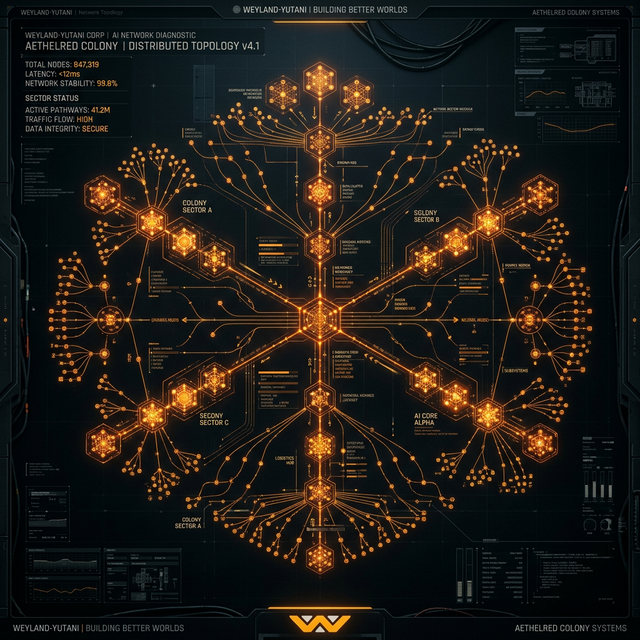
The management of a terraforming colony or a deep-space mining platform is too complex for a single, centralized AI core. The latencies involved in processing global atmospheric data, power distribution, and personnel vital signs would lead to critical response delays. Weyland-Yutani's **Node-Logic Architecture** solves this through 'Intelligence Stratification'.
At the apex of the hierarchy is the **Mainframe (Mother/Father)**, which handles long-range strategic planning and corporate security protocols. Beneath the mainframe is a network of **Operational Sub-Nodes**, each dedicated to a specific industrial or biological system. These nodes aren't just processors; they are autonomous agents capable of independent 'Thinking' based on localized environmental inputs. We don't just build a brain; we build a nervous system for the planet.
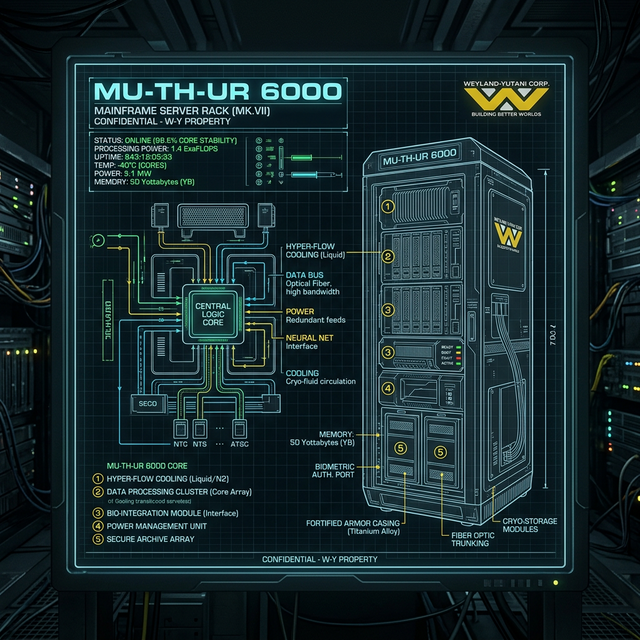
[ FIG 4.2: NODE-LINK TOPOLOGY // HADLEY'S HOPE INSTALLATION ]
SYSTEM STATUS: DATA-LINK SYNCHRONIZED // LATENCY: 0.003s
The Speed of Decision
In deep-space operations, data is light. The efficiency of the link between nodes determines the speed of the colony's response to disaster. Our **Tachyonic Data-Conduction (TDC)** protocols allow sub-nodes to share heuristic updates in real-time across distances of up to 40,000 kilometers without significant packet loss.
This allows a 'Hive-Mind' response to environmental shifts. When a tectonic sensor node on the planet's surface detects a tremor, every atmospheric stabilizer node on the other side of the world adjusts its pressure-valves within 0.003 seconds. The planet becomes a single, reactive organism, optimized by Weyland-Yutani logic.
Understanding the Human Variable
One of the most complex tasks for a Node-Logic system is the **Human-Heuristic Translation**. Personnel on our colonies are notoriously unpredictable. To manage this, our 'Personnel Nodes' utilize advanced behavioral modeling to predict person-to-person interactions and resource usage patterns.
The system doesn't just monitor current oxygen usage; it predicts future usage based on the sleep cycles, exercise routines, and even the emotional fluctuations of the crew. By anticipating human needs before they are expressed, the Node-Logic system ensures a frictionless social environment where corporate productivity can flourish without the 'Noise' of human dissatisfaction.
The Executive Override
While the sub-nodes handle the daily physics of the world, final authority always rests with the mainframe via the **W-Y Executive Protocol**. This protocol allow corporate headquarters on Earth to issue high-priority directives that bypass localized heuristics. Whether it's a change in mining quotas or a specialized scientific mission, the Node-Logic network ensures that the corporate will is implemented with absolute fidelity.
This central-to-local link is guarded by **Level 9 Quantum-Encryption**. Even if a colony's physical infrastructure is compromised, the corporate data and the mainframe's loyalty remain secure. We own the logic, and therefore we own the world.
Total Planetary Management
The final goal of our Cybernetics division is **Total Planetary Management (TPM)**. We envision a future where entire star systems are managed by a single Node-Logic cluster, where every sun, planet, and asteroid is a data point in a vast corporate ledger. In this future, the risks of human error and political instability are removed, replaced by the perfect efficiency of Weyland-Yutani logic.
At Weyland-Yutani, we aren't just building machines; we are building the government of the stars. The Node-Logic system is the foundation of a new, organized universe.
— Dr. J. S. Vane, Senior Systems Architect, Weyland-Yutani