TACHYONIC SHUNT THEORY
Breaking the Light Barrier: A Century of Ambition
For centuries, the speed of light—approximately 299,792,458 meters per second in a vacuum—was considered the absolute ceiling of human ambition. Einstein’s special relativity posited that as an object with mass approaches 'c', its energy requirements approach infinity, and its mass becomes insurmountable. For a hundred years, humanity remained 'shipwrecked' in the Sol system, staring at the stars through telescopes, unable to reach them within a single human lifetime.
The breakthrough came not from a new engine, but from a new understanding of the vacuum itself. Theoretical work in the late 21st century suggested that while nothing *within* space can exceed 'c', the fabric of space itself is subject to no such limitation. This realization led to the First Weyland Shunt Experiment, which proved that the geometry of spacetime could be manipulated to create a 'bubble' of local reality that moves independently of the universal speed limit.
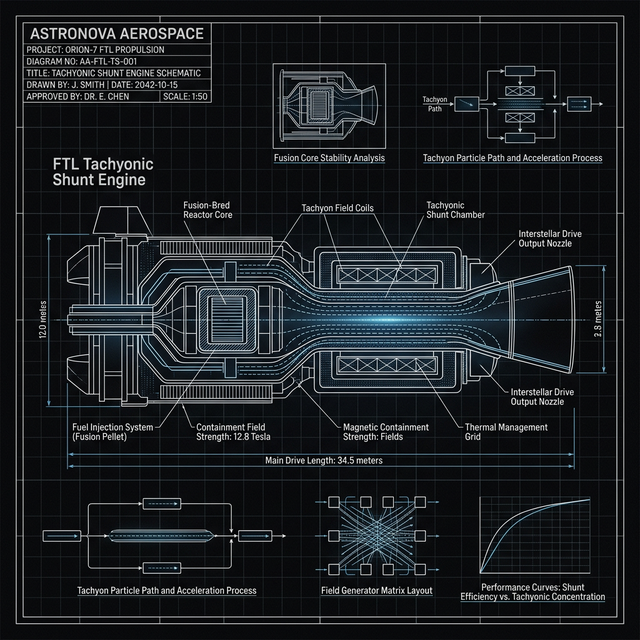
FIG 1.0: WEYLAND-YUTANI T-402 SHUNT COIL ARRAY (HISTORICAL SCHEMATIC)
The Tachyonic Shunt: Mechanics of the Void
Weyland Corp’s Tachyonic Shunt Drive (TSD) technology is the cornerstone of our interstellar fleet. Unlike primitive chemical rockets or even advanced fusion torch engines, the TSD does not rely on traditional Newtonian reaction mass for propulsive force at relativistic speeds. Instead, it utilizes a high-energy field of sub-atomic tachyon particles—theoretical entities that exist natively at superluminal velocities—to 'shunt' a vessel out of the four-dimensional Minkowski space.
The core of the drive is the Shunt Coil. When energized, these coils generate a localized hyperspatial distortion. By injecting high-energy tachyons into this field, we create a phased state where the ship’s effective mass is reduced to zero, or even becomes 'imaginary' (in the mathematical sense). In this state, the ship does not 'move' through space so much as it 'slips' between the folds of dimensionality.
E² / (pc)² = 1 + (mc/p)²
[REDACTED] Protocol 9-F: Tachyonic Phasing Constant λ = 4.22x10⁸
Spacetime Curvature & The Warp Bubble
Our drives operate on a modified Riemann-Alcubierre metric. In simple terms, the drive compresses spacetime in front of the vessel and expands it behind. The ship remains stationary within a 'warp bubble' of flat, Minkowski space. This bubble is then 'swept' along the curvature of the universe at speeds that appear superluminal to an outside observer.
The energy requirement for this operation is staggering. To create even a minor curvature in the vacuum requires a localized energy density comparable to a small star. This is where Weyland’s Fusion-Bred Antimatter (FBA) comes into play. By reacting hydrogen with high-stability antimatter within a magnetic confinement chamber, we generate the terajoules per millisecond necessary to maintain the Riemann Shunt Field.
[ DIAGRAM 2.4: ALCUBIERRE METRIC TENSOR VISUALIZATION ]
SYSTEM STATUS: PENDING CALIBRATION
The Price of Speed: Time Dilation & Chronal Drift
One of the most significant challenges of FTL travel is the violation of Lorentz invariance. While the warp bubble protects the crew from the extreme time dilation of near-c travel (where centuries pass in the outside world), TSD travel introduces its own unique phenomenon: Chronal Drift. Because the ship is effectively moving across 'non-time' states, the internal clocks of the vessel can drift out of sync with Objective Galactic Time (OGT) by several minutes per light-year.
Furthermore, theoretical physics warns of the 'Causality Paradox'. If one can move faster than light, one can theoretically arrive at a destination before the light of their departure has reached it, creating a potential loop in the causal chain. Weyland-Yutani engineers solve this via the **Heisenberg Governor**, a device that locks the vessel’s chronal state to the local gravitational well, ensuring that 'forward' remains the only direction in time.
The Biological Constraint
While the ship itself is shielded from the physical stresses of the shunt field, the human nervous system is not. The sub-atomic vibrations of the tachyon containment field interfere with neural synaptic signaling. Prolonged exposure—even through 12.8 meters of lead and polycarbonate shielding—causes 'Shunt-Induced Psychosis' or permanent cognitive degradation.
Consequently, all non-synthetic personnel are required to enter 100% metabolic stasis (Hypersleep) for the duration of any transit exceeding 48 hours. During this time, the ship is piloted by the MU-TH-UR 6000 mainframe or a qualified synthetic officer, whose silicon-based connectome is immune to tachyonic interference.
Towards Inter-Galactic Transit
The current T-402 Shunt Coil is limited by the stability of our antimatter fuel. As we look toward the 2130s, Weyland Corp is already testing 'Zero-Point Extraction'—the ability to draw energy directly from the vacuum itself. If successful, this will eliminate the need for fuel entirely, allowing our scout ships to reach Andromeda within a decade. The universe is getting smaller, and Weyland is the architect of that contraction.
— Dr. S. K. Vasquez, Lead Physicist, Weyland Science Division